Production research
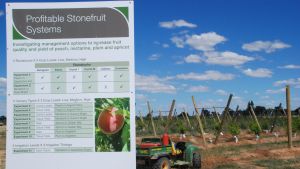
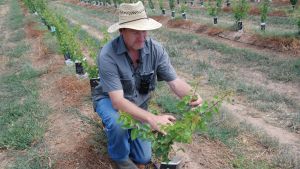
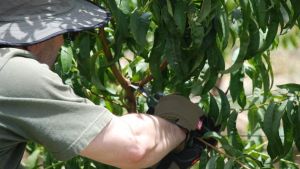
To target high quality fruit, strategic canopy and cropload management practices are currently being investigated in designed field experiments at Agriculture Victoria, Tatura, in the stonefruit experimental field laboratory.
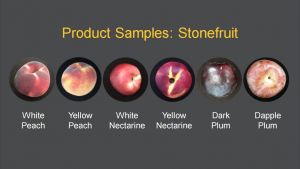
- Apricot, Nectarine, Peach and Plum with high, medium and low crop loads.
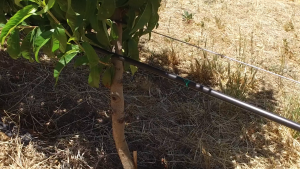
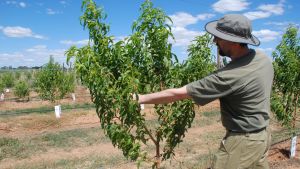
- Tree training systems: Tatura Trellis, Vertical leader & Vase - all have same planting density, micro-drip irrigation.
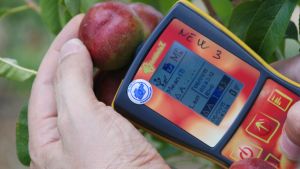
- Research parameters: light interception, trunk size, tree performance, yield, fruit number, fruit quality - Brixº, maturity, firmness, colour, size.
On this page:
- Protocols - Current recommendations and guidelines
- Results and Observations for 2022
Protocols
Current recommendations and guidelines
Researcher: Mark O'Connell, Agriculture Victoria, Tatura (https://www.researchgate.net/profile/Mark-Oconnell-9)
Protocols for canopy design options for stonefruit
- Research into canopy design on peach, nectarine, plum and apricot at Tatura using Vase and various trellis systems found canopy design effects tree growth and vigour and impacts yield and fruit quality.
- Canopy designs range from low-density free standing (Vase) trees to modern high-density 2-dimensional (hedgerow) vertical trellis and 3-dimensional V-trellis systems.
- Canopy design will strongly influence orchard management (irrigation, nutrient, pest & disease), labour inputs, infrastructure (posts, wire, soil anchors) costs, tree light interception, vegetative growth and development, fruit quality and production potential.
- Canopy design is an important orchard business decision that should be made before crop establishment as it is very difficult to retrofit an orchard.
Protocols for crop load management in stonefruit
- Flower and fruit thinning are agronomic practices aimed at changing the ratio of carbon partitioning between leaves and fruits.
- Thinning dictates the number of fruit per tree and directly influences tree growth and development, yield and fruit quality outcomes.
- Thinning activities contribute to the cost of orchard production via labour required; however, optimal crop loads can save $ through reduced picking, packing and transport costs.
- Excessive crop loads result in small fruit size, delayed maturity and poor fruit quality despite yielding higher. Therefore, optimal crop load management is required to achieve high marketable yield and good quality fruit outcomes whilst maintaining sufficient vigour and return bloom to sustain long-term yield.
- Research into crop load management on peach, nectarine, plum and apricot at Tatura has found average fruit weight and fruit sweetness (°Brix) decreases rapidly with increasing crop load. Fruit maturity (flesh firmness, colour development) is delayed under high crop load. Low fruiting levels increase tree vigour (shoot length, pruning weight, trunk diameter).
Protocols for crop load management in stonefruit Download PDF in new window (Note: this document does not meet WCAG 2.0 accessibility guidelines)
2022 Results and Observations
Yield and fruit quality results from the canopy – crop load study
Project acknowledgement
This research (SF12003 Increased stone fruit profitability by consistently meeting market expectations; SF17006 Summerfruit Orchard Phase 2) was funded by Agriculture Victoria with co-investment from Horticulture Innovation Australia Limited using the Summerfruit levy and funds from the Australian Government.
These publications may be of assistance to you but the State of Victoria and its officers do not guarantee that these publications are without flaw of any kind or is wholly appropriate for your particular purposes and therefore disclaims all liability for any error, loss or other consequence which may arise from you relying on any information in these publications.
In this section
- Time series photos Experiments 3 to 10
- Crop load and fruit position influence variability in nectarine quality
- Canopy design options for stonefruit
- Introduction to the canopy & cropload experiments
- 2021 canopy cropload results
- 2020 cropload management and canopy architecture results
- 2019 Cropload Results
- 2017 Cropload Results